
Unhindered

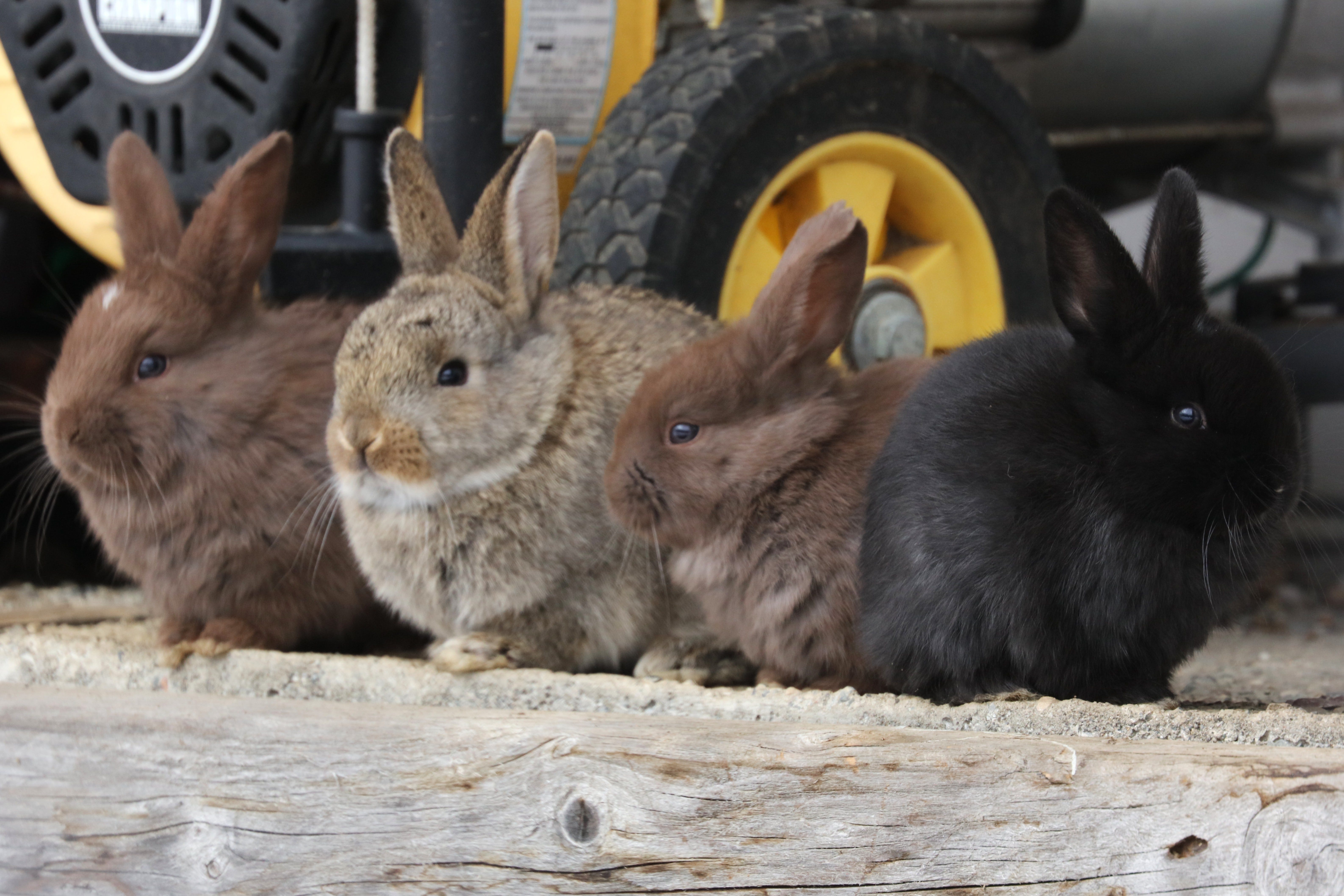
Last summer, two domestic-gone-feral rabbits appeared at our doorstep. By late fall, they had made their home under a porch near the woodshed. We gave them treats from the garden, and they livened up the place. It wasn’t the first time domestic rabbits had appeared – previous couples visited and later vanished. Years ago, I might have agreed with the many people – often gardeners – who say, “Don’t feed them,” as if it were a proverb.
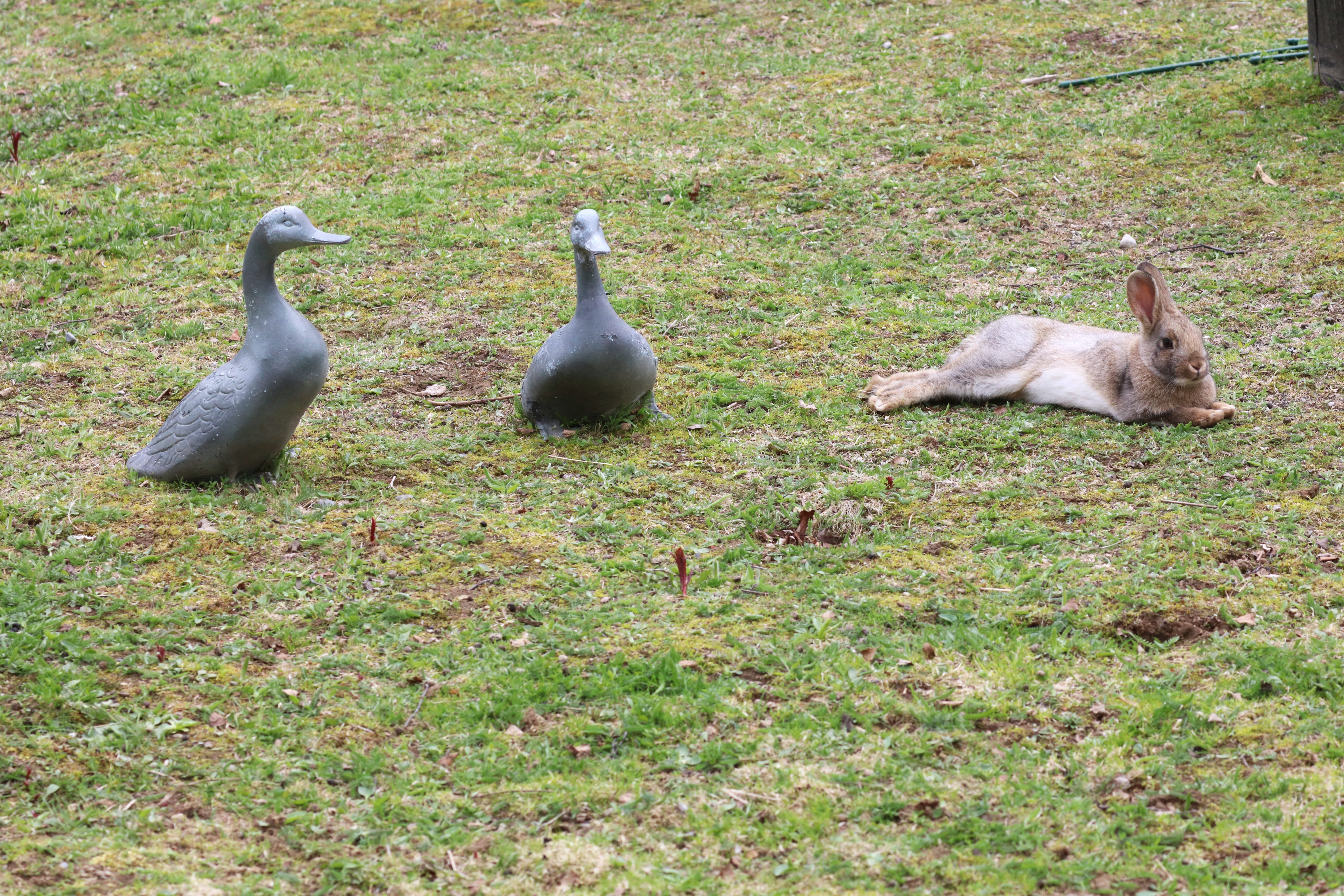
There is no room for the pragmatic, realistic, or common sense when it comes to enjoying the fact that you have more than 30 rabbits in your yard. By mid-May, the number of feral rabbits living around our house had grown to 53 – we counted them by the number of new young that would “hatch” from beneath the porch or various brush piles. Despite what Steve said along the lines of “we have a problem,” when the weather allowed him to burn the brush piles, he let them stand.
It wasn’t like I purchased these rabbits at a 4-H Expo. They just appeared as a pair of weary travelers who were hungry and trusting. Their company was in some ways more nourishing than other human relationships, which sometimes seemed to involve a lot of talk without a deeper connection. I imagined that I would slow down and sense what was unfolding in the yard without overthinking.
Steve delivered carrots to the bunnies each morning. No matter what I thought about the “problem” – which is not the collective noun for feral rabbits – it did my heart good to see the tiny furballs surround him, chase each other, and twitch into the air. I loved to watch them eat dandelions.
When Cogswell, a 12-year-old English setter, took to watching the rabbits with us, it seemed like such a sweet thing for an aged bird dog to do. Eventually, he moved off the deck and sat in the grass with the rabbits all around him. One of the rabbits nearly touched noses with him one evening. It seemed to suggest something rare and beautiful.
I didn’t question myself too much as I placed fencing around the apple trees, tamarack, wild strawberries, and any other wild plants I wanted to keep off the menu. Neither Steve nor I went beyond the step of admitting there was a problem, and I half wondered if our circumstances weren’t somehow related to prolonged grief after a series of heavy losses.
Carl Jung once said, “The more uncertain I have felt about myself, the more there has grown up in me a feeling of kinship with all things.”
I was content to let my unresolved grief appear in the yard as fate. I could take care of the rabbits just as I could take care of the dogs as they were growing older. What was another mouth to feed?
“It’s odd a hawk hasn’t shown up,” Steve said.
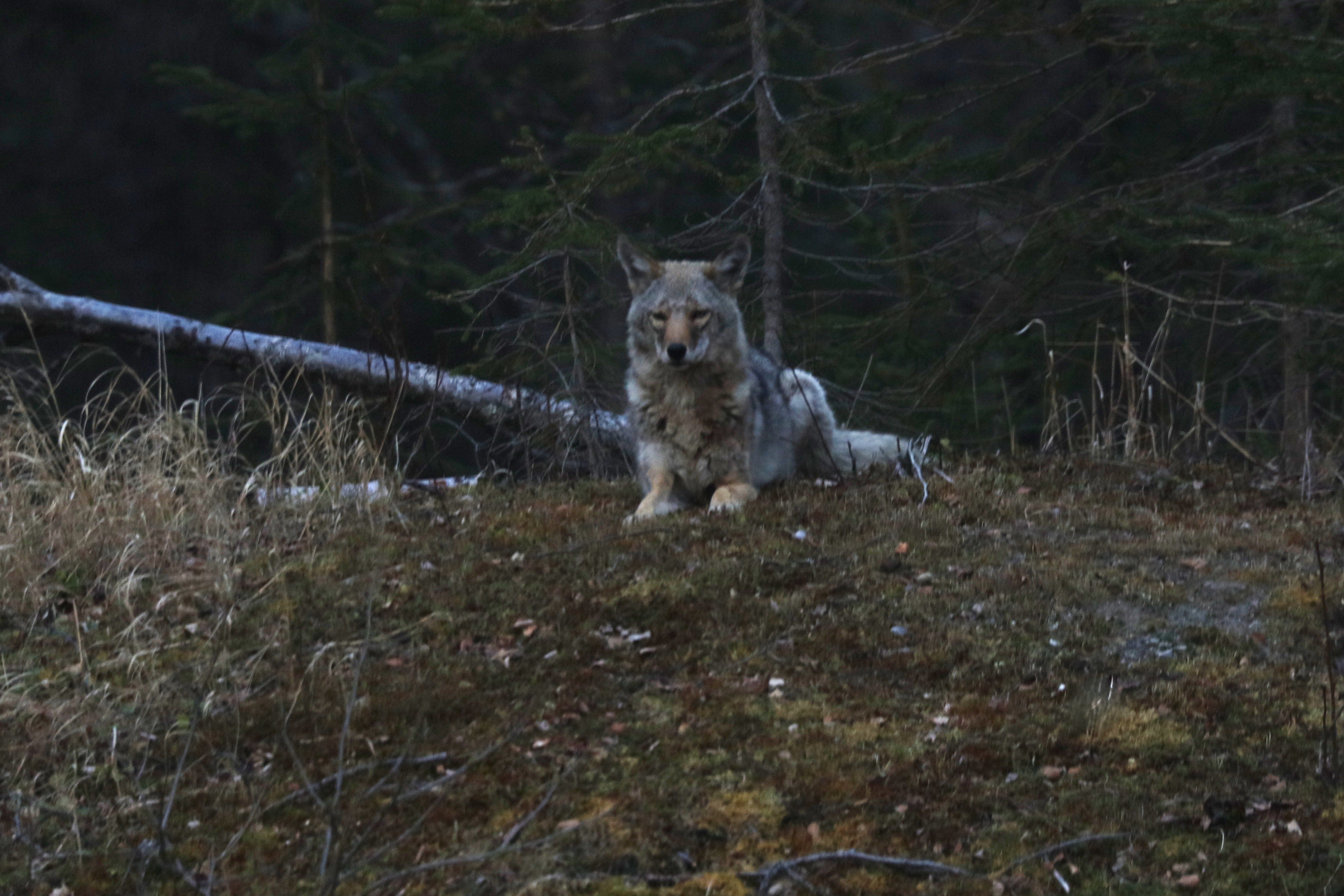
A few weeks later, a coyote arrived. He lay down on a hill overlooking the bunny “pasture” seemingly without a care. Eventually, he got up, looked around, and snatched up a carrot before trotting away with it.
We couldn’t believe it. It was as if Trickster had arrived. Bugs Bunny the coyote. I had the sense that something was transacting, but I couldn’t understand it.
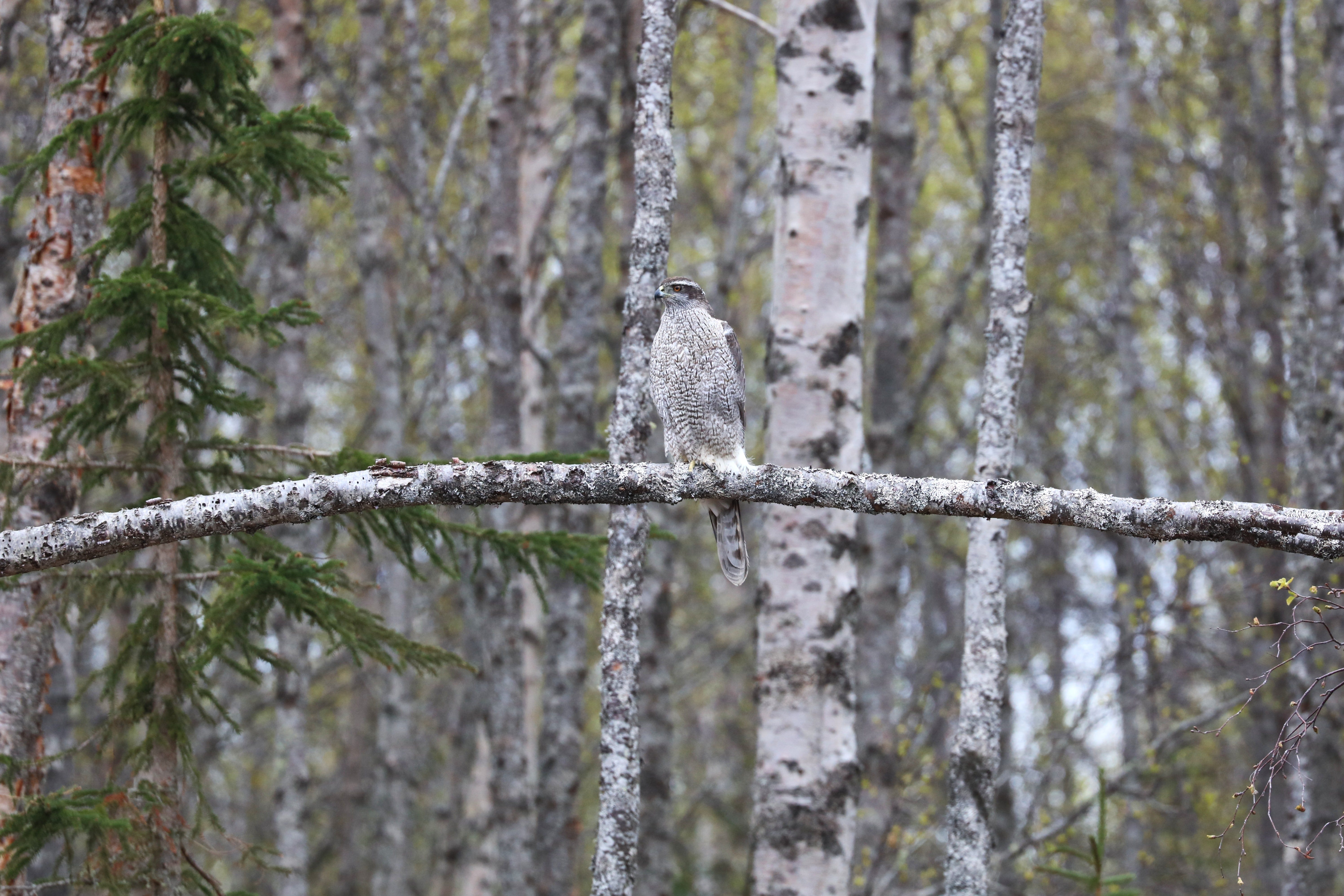
Later that same day, a goshawk landed in a birch above the brush pile. He watched for half an hour as the bunnies peered out from underneath vehicles. He flew away, but Steve said, “He’ll be back.”
Over the next several days, the number of rabbits in the yard began to decline. We never saw a kill, but we saw signs – blood and fur.
A neighborhood cat and a black bear showed up on different mornings before the great gray owl swooped into the yard and landed. He killed one of my favorite young bunnies – the one with the white face – and left it lying dead outside the garden fence.
I am a hunter, so it may seem incongruent that I found it upsetting to see the owl had killed two rabbits that morning and left this one with just a puncture mark.
“If that owl killed this bunny and is not going to eat it, I’m going to be pissed,” I told Steve. “He better come back for it,” I added, as if I were the owl’s mother. Then I sat by the window with the binoculars until it occurred to me that, as Steve had said many times already, “We have a problem.”
Maybe he wasn’t talking about the rabbits.
Somewhere along the way, I had become the person who lectures wild animals about finishing their dinner or not having intercourse with relatives. But I have always been interested in the intersection between the wild and domestic. I had read that lynx will kill and not eat chickens in an enclosure. A wolf may decide not to kill an animal that makes a stand.
What has domesticity done to these once wild creatures? What has civilization done to me?
I thought of the wolf I saw once in the Arctic – the loping, hungry gait and predatory eyes of a creature for whom remorse is a luxury.
The exact wolf in my mind is a lone white wolf first spotted by the pilot. It took me a few seconds to recognize the shape below, and at the same moment, the wolf looked up at me, flying overhead in a small plane.
Part of me went out to the wolf in an attempt to understand the nomadic life of an animal living unhindered and without remorse for killing caribou calves. And, part of me felt romantic and ridiculous for staring out from confinement at a living being as an emblem of freedom when I’d be back to work in a week.
Now, I was staring out the kitchen window.
The comparison between dogs and wolves is as far-fetched as the comparison of a snowshoe hare and a domestic rabbit. Wolves are wolves – the wild spirit of the land, the monstrous mother who nurtures and destroys.
Like me, dogs crave adventure, but there is always a warm house waiting for us to return.
All my miles, all my journeys, as much as I love to go and look at open country to purify my mind, sort out the notes of water and rocks falling in the mountains, smell the faint hint of petals mixed in with the heavier scented greens, taste the cold white water purified over rocks, and lie on a bed of lichen, which seems to grow against your back as a testament to the ever-living mountain, it is only as a visitor, hindered by a requirement to return home.
I wondered if the rabbits had a wild mountain or river. What was the place that was not home?
It may well be that it was, for those who were not born here, my yard.
As these thoughts crossed my mind, the owl came back and took the young rabbit. He is wild and hungry, and so I find no fault in his methods.
Today, we have about ten rabbits in the yard. Steve is away camping, and I am the one handing out the carrots. This afternoon, I sat down in a lawn chair by the woodpile and could hear Huey the squirrel chirping at me, which I took as a reminder to go get him some nuts. When I came back, there was a baby squirrel next to my chair.
Until I find a better way to be human, I’m content to let the brightness of this cheeky little spirit make my day.
One of your best stories Ms. Cunningham, well done!!
Carl Jung has me figured out I feel. As the body weakens, and the ability to climb a mountain at any time has become somewhat tenuous, and for some mysterious reason the drive to go out and kill (hunt, in case someone misses the reference and wants to report me) life’s certainties have become a lot less that, and I find my soul getting gentler, more understanding. Which hopefully keeps “grumpy old bastard” status at bay a little longer.