
Stealth

The lights were off in my bedroom, and the kitchen light backlit Hugo’s shape at my bedroom door. His body was still and alert. As much as I tried to see the movement of breath in his ribcage, I couldn’t tell if he was breathing, even as the snores of four other dogs emanated from various points outside my room.
Boss lay along my legs, sleeping without much sound as Hugo and I regarded each other. I reached my hand out to him, and he began to take a step through the doorway. Before his claws touched the wooden floor, he paused.
It’s been said that when a pointing dog points, the point is nothing but an exaggerated stalk. I never had more insight into Hugo’s character than watching him use his physical prowess to cross a bedroom in the night without waking five other sleeping setters.
Hugo never faltered in his technique. Although the situation reminded me of the Warner Brothers cartoon in which Yosemite Sam is a Roman legionnaire sneaking across a lion’s den, Hugo had an old-world grace, without a single word in his life to prove otherwise. He moved like a cat without the crouch.
I heard Colt jostle – a familiar sound from the place where he sleeps, the way he ruffles himself before settling again. Hugo froze. One of his back legs was in the air, and it stayed there.
His eyes shifted to me. That was the only movement. Seconds passed before the back leg came down, slowly as if an electric door closing. He waited again.
I wondered if I was prey, like the songbirds he stalked. I wondered if he would launch onto the bed all of a sudden? It was often his way to move slowly and then quickly. What is in this dog that he would spend half an hour crossing a room?
A predator searches, stalks, kills, and consumes. But Hugo was not a killer. He regarded his meals with the discernment of a child who doesn’t like vegetables or food of a certain color. His attention drifted from food so often it seemed he was looking for reasons not to eat. Calling him prey-driven, given his lack of interest in consuming, seems insufficient.
Rather than attend to food, his serious pursuit was birds. Anything could be a bird. A moth or a bee compelled him into a similar state. A mouse crossing the floor caught his attention as if it were a robin landing on the woodpile. He would attend to the place he last saw the mouse as he was attending to me.
Like I was a bird.
I always figured this was due to breeding, even as I listened to the other dogs – his littermates – sleeping nearby. Even as I watched them eat with sameness: heads down in their dishes until finished, except Hugo.
He looked at me across the room without looking into my eyes. We watched each other. I noticed how it seemed his eyes locked with mine only in the stop he made between each step, when he let the room settle.
Hugo was invisible when he stopped moving, or so I imagined he believed. When he checked my position, his gaze reminded me of the way a hunter avoids looking at prey, knowing that a hard look attracts attention. Hugo looked at me in this gentle way, from one periphery to another. A look that does not intrude.
Why is he expending so much effort? Why was I so fascinated by his behavior?
All I could come up with, at the end of his stalk when he pressed his nose into my neck and stepped onto the bed, knowing I would guard his passage, was that Hugo was a perfect expression of himself.
He did not spend his time searching, killing, or consuming, as other dogs or wolves sharing his ancestry might. He did not fill his time with play or small conflicts among his littermates. He did not spend his time in unnecessary ways but mastered exactly what it was that he did best. He could stalk like no one else. He could pay attention.
He moved with presence and an instinct that called to something wilder beyond himself. Like his father before him, they were both serious bird dogs. They are the wolves howling for me somewhere. They are calling me to join them, follow them, and they show me where birds hide in a field. They set aside animal instinct so that I may shoot a bird cleanly, and so we each act our part as beautifully as blood and brain allow.
As I think back on that nighttime stalk many years ago, Hugo is going on 12 years old. He spent little time in the mountains this past year, but when his feet hit the ground, he ran the farthest of any of us. He ran as wide open as a dog of his age could, with a grin as old as time.
Nothing makes us feel as alive as those days when a bird is the thing most worthy of our attention, making us worthy.
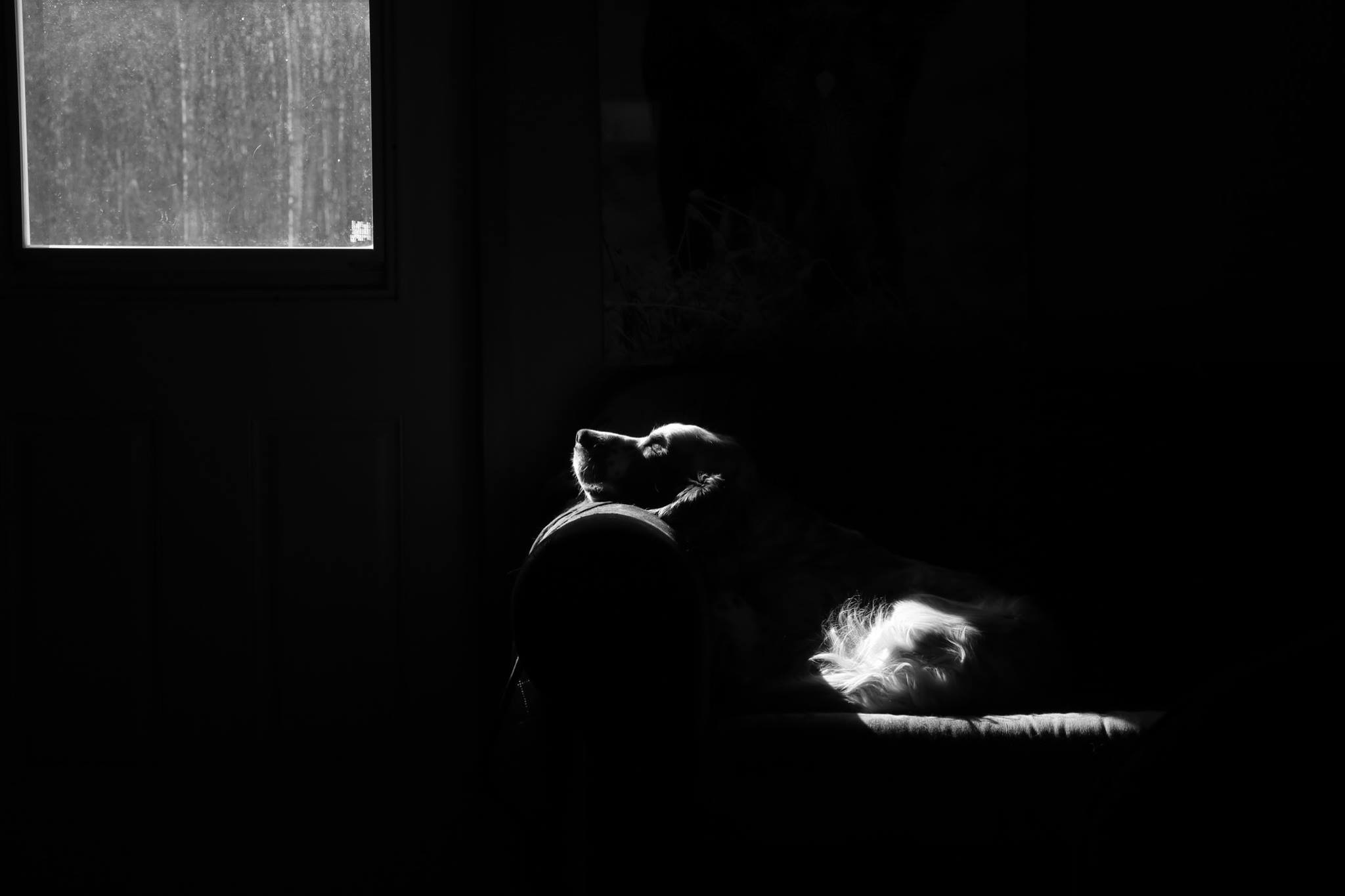
Now we are near each other in our declining years. I am at my desk, and he sleeps at my feet.
His body twitches with memory like I type at keys. Digesting our days afield, our best days.
It may be that life is fading before us. Or that we are just beginning to imagine its absence while still waiting for our next chance. Growing old with a dog is heartbreaking. It is limiting. And still, when you cannot do it over, you replay the moments. You cross the room again and again in your mind.
You cross it like it means something to carry the weight of your being and purpose.
I love the way Hugo still regards the world around him as if any moment a bird could fly up. I love how he gives his full attention to the present, wherever he finds himself, and I love sitting beside him as he dreams.
Summer grasses,
All that remains
Of soldiers’ dreams.
— Bashō
It is a gift to write such that the reader not only reads, but sees.
Beautiful writing. This one is going to stick with me for a while. Thank you for that.