
Reason to Stay

The first time I heard there was a fine line between genius and crazy, it was in regard to bird dogs.
If you’ve ever followed a big running English setter into a wide mountain valley, watched him run up the valley wall like it was a stubble field only to stop suddenly, go on point nearly 1,000 feet above you, and hold his point for nearly a half hour while you hauled your pathetic human body up the rocks like it was a hundred pound sack of potatoes being drug along by an insect brain, you know that the expression means you must be crazy too.
Genius and crazy are subjective. One person’s genius might be Michelangelo’s David; another’s might be the way a grandparent and his granddaughter examine a willow ptarmigan together for Thanksgiving on Adak. One person’s crazy might be jumping out of an airplane without a parachute; another’s might be keeping a litter of English setter pups when you already have six sporting dogs.
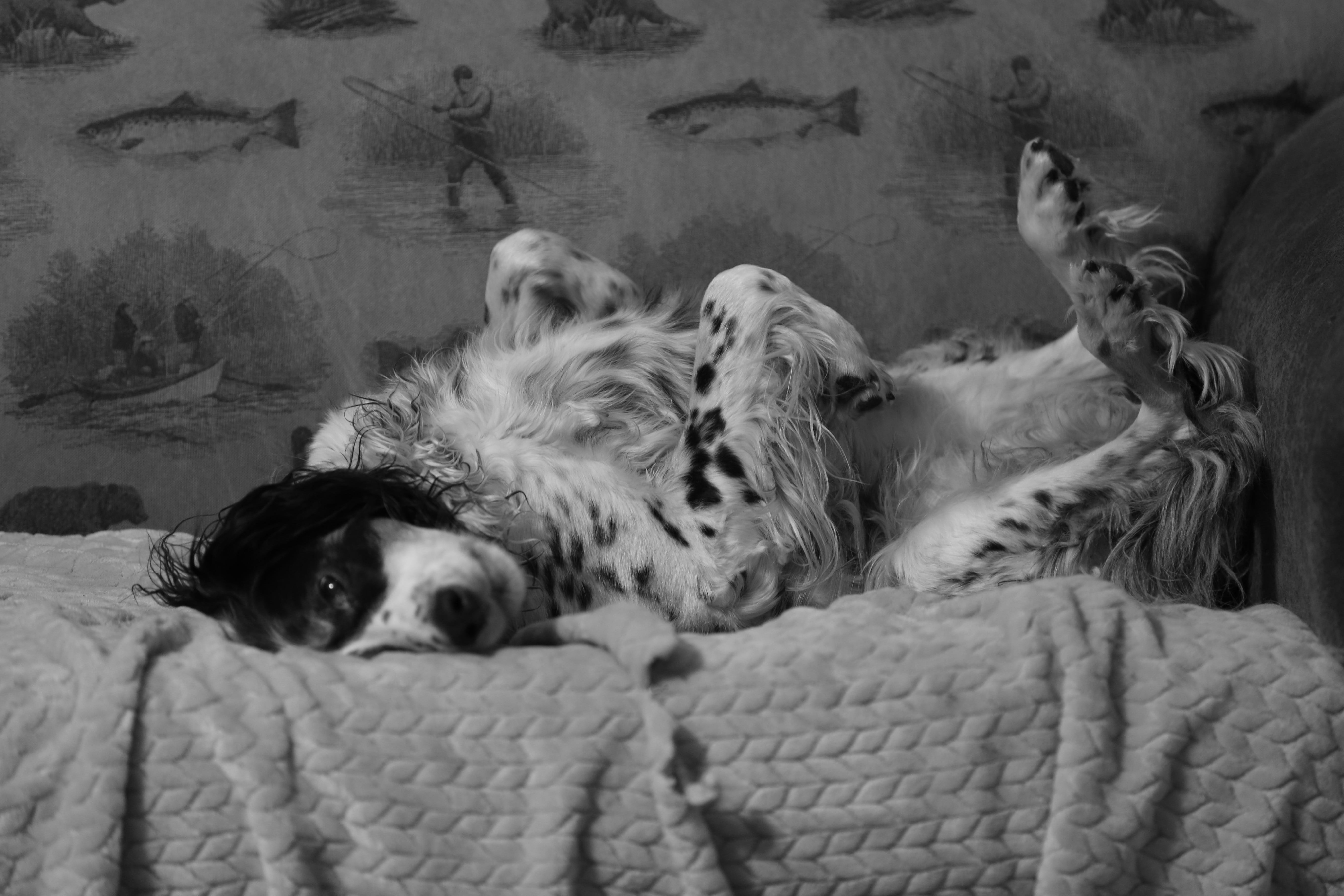
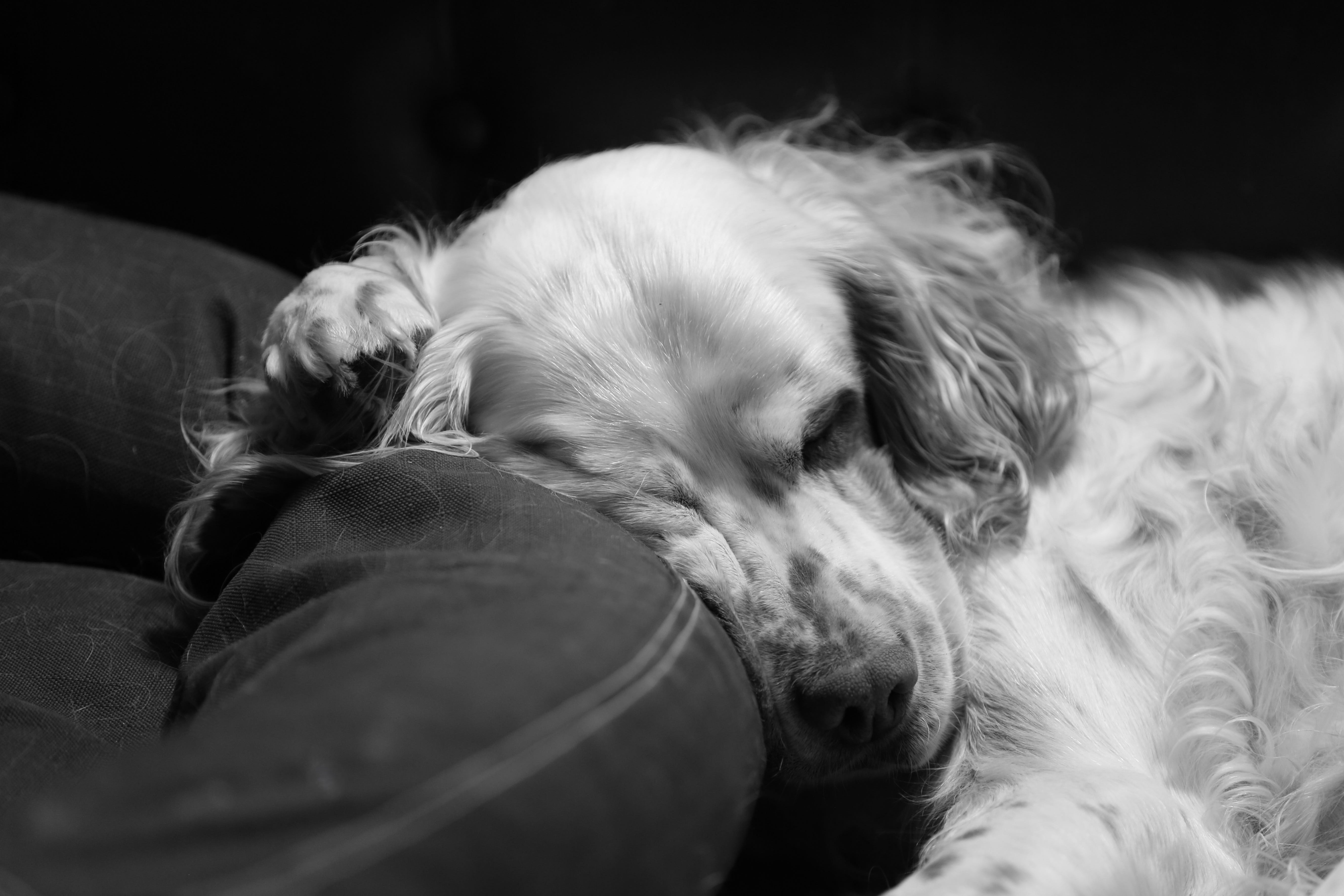
Winchester was not a genius or crazy – those words don’t seem good enough to describe the finest dog I have ever known. He was the best, and not just because he had a better pedigree than me (he had champions in his background, and I do not). He had a way of being wide open to life and mastering it on his terms. I loved to watch him work, and he awed me like something genius or crazy might.
Maybe he was destined for greatness – his ancestors had been treated as elite athletes for generations. They were field trial setters, who hunted far more often than they tested. They ran over the prairie and evolved from a crouching stalker of the English countryside to an animal that runs a marathon every day and stops with a twelve-o’-clock tail, straight as a pole with a feathered flag blowing in the wind as if to claim the place as conquered.
Winchester was old world grace and new world swagger. He showed us mountains that I had never seen from the trail as if he were showing them to his ancestors. As if he were showing them to the eternal audience. Not just to find game birds but to celebrate them as the sole occupation of not just one life but the pinnacle of a lineage.
The experience of going to the mountains with Winchester all those years ago – seeing his silhouette charged by light, his great bright eyes daring Steve and me to be as alive, watching him cover country in minutes that would take us an hour, was to see your soul.
I do not mean soul in the sense of a personal trinket. I mean soul in the sense of the world soul. The thing that charges us all with life and shows up as billions of stars.
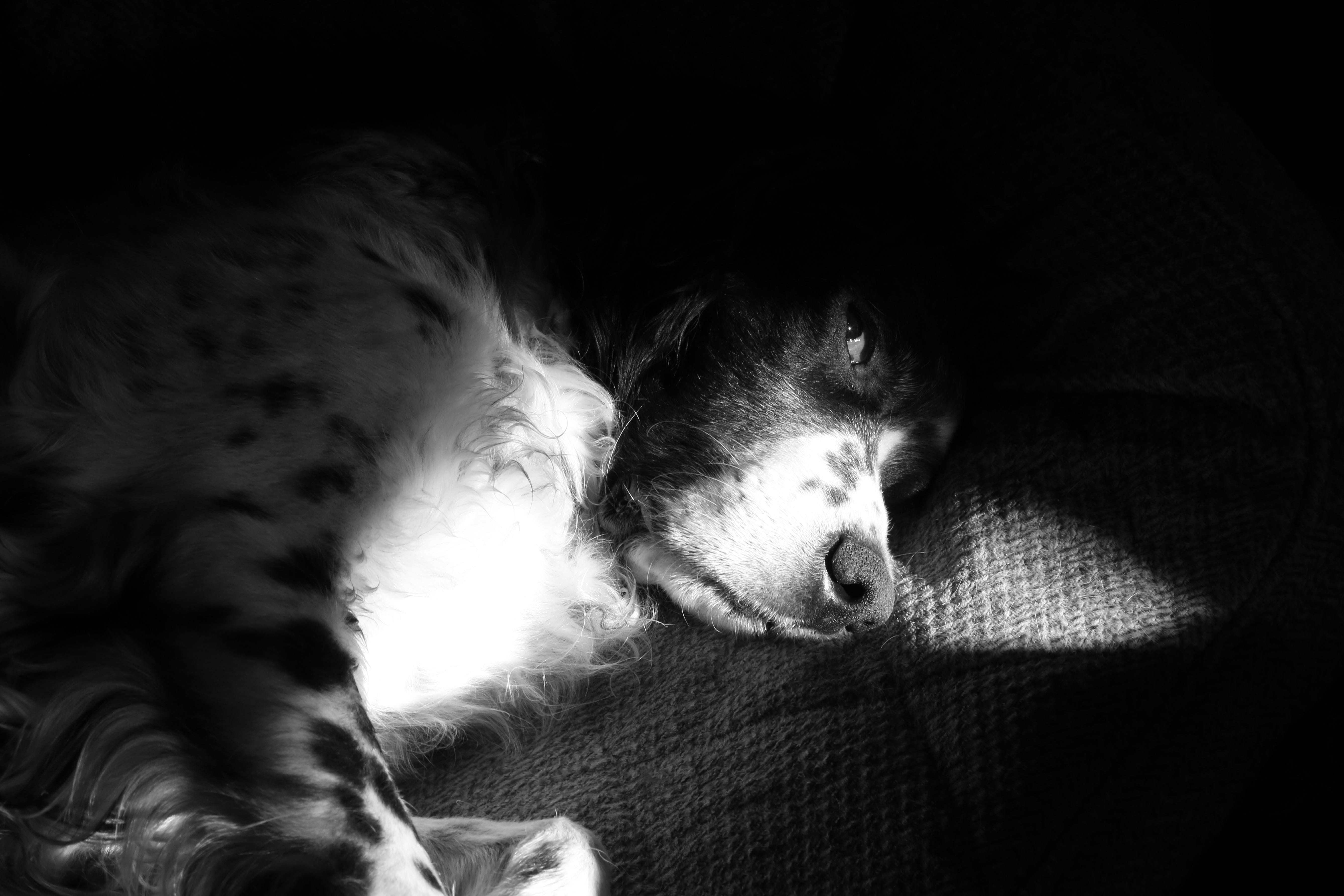
The grief in saying goodbye to Winchester and our years together has stayed with me. I don’t say this lightly. I say it with the full weight of my daily burden to continue to exist in a world without him in it – a form of mental unhealth that might qualify as crazy without any chance of being mistaken for genius.
On top of Winchester leaving us, his litter of pups is now going on twelve years old, keeping us closer to home. I am going through what my doctor calls perimenopause. Apparently, I should have looked it up at some point before it happened. It may be what is making me crazy lately. I don’t know how to tell, as I am writing this under its influence.
There is good crazy and bad crazy. Good crazy is “Crazy like a fox.” Bad crazy is crazy, “truly,” or like the woman who pulls over on the side of the road to cry at the sunrise. I have done that lately. On more than one morning. I am probably on somebody’s trail camera. Me and a particular seagull. But I digress.
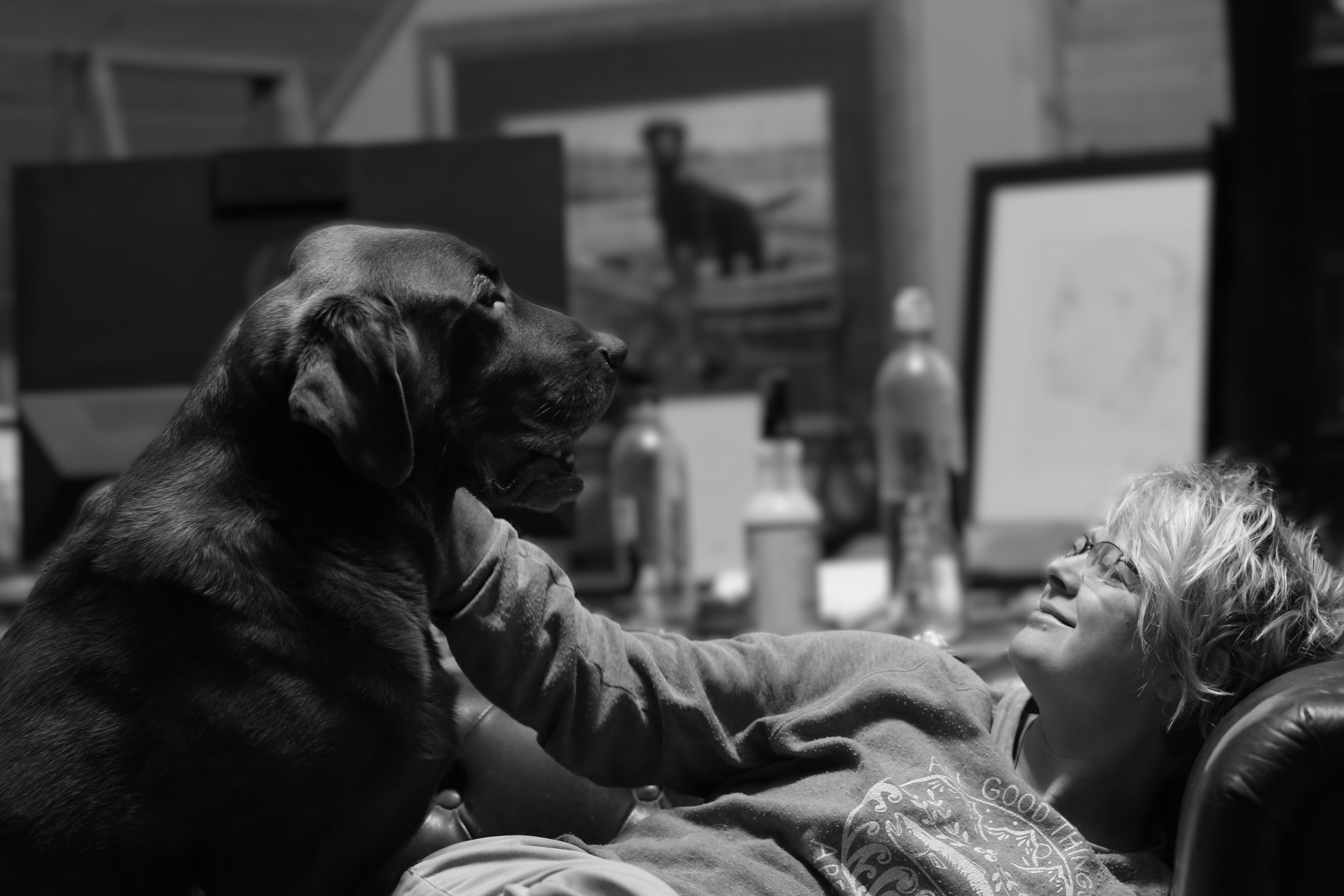
My saving grace has been a chocolate Labrador named Rigby. He came into our lives five years ago as a fat and healthy pup who only ever needed to be adorable. He did not have to be masterful or show us worlds we had never seen. He seems to love every food-filled moment, and his very presence brings sanity and the simple joy of being alive.
Last week, I sat with Rigby, now five years old, who has been shaved for an ultrasound, and I questioned if we were doing the right thing for him. He is going through chemotherapy in a similar way that humans are treated for cancer. The vet says that dogs tolerate it better than humans and that the focus of the treatment is on quality of life.
It doesn’t seem to bother Rigby that more than a square foot of his fur has been shaved off or that each of his legs has a cuff mark where the IVs have been administered. He still plops himself on a snowbank as if it were a pile of pillows. He still plops himself across my lap in the recliner.
I find myself thinking about how monks shave their heads as a symbol of commitment to the monastic life, and how, as much as Rigby can share human food, furniture, and treatment modalities, he cannot demonstrate a detachment from personal vanity and societal norms by shaving his head. He also can’t chant.
These private musings are not things I usually say out loud or consider worth sharing, and yet, here we are. A girl and her dog. Grateful to be alive, even if his only commentary is a deep sigh and a snore. Rigby is stretched across my lap, all 109 pounds of him, a giant sack of potatoes and the world’s best therapy blanket in one, with me peeking out from underneath.
It’s one of my favorite things to sit there like this. It makes me smile like an idiot.
Earlier this week, I received a follow-up report by email from Rigby’s vet that said: “Radiographically, he does not have persistent evidence of a mediastinal mass, which is encouraging for a robust clinical response to his treatment!”
The joy of being alive in recovery is not the same as the feeling you have taking in the view from the top of a mountain, but it is a part of that feeling. It is the foundation. It is the bottom of the mountain, the widest part of our lives. It is most of our hours in most of our days. The place where we can be most grateful but seldom are. At least I am not as often as I should be.
But that’s where I am now, somewhere between amateur and responsible. Somewhere between love and loss. In that place that is life, where the feeling is always better described in a song than in a medical report, even if the news is the same.
The vet said it best: dogs tolerate things better than humans, and it is best to focus on the quality of life.
She may not have gone so far as to say dogs know how to live better than we do. She certainly didn’t go on to say that maybe the fine line between our left-brain thinking and our right-brain feeling has become too fine and the left brain has taken over, filling our days with too much data and judgment, without the holistic right brain there to shake her head kindly and say, my child, you have got it all wrong. She may not say it in the same lyrical voice of my hormone-riddled mind, but she may say it like this without apologizing for the rhyme:
The information may say one thing, my dear, and it might say it in every calculation every time. But there’s something that the data can never say, and that is, everything will be just fine.
It has always served me well to follow a dog. They have been my reason to go and now they are my reason to stay.
Thank You!
Hopefully, someday we might meet; if my cancer doesn't get there first.
I do follow you and your sister, my nieces.
Love your readings or writings.
As a doctor (retired), I have to say that, “Radiographically, he does not have persistent evidence of a mediastinal mass, which is encouraging for a robust clinical response to his treatment!”, is one of the greatest examples of med-speak I’ve ever read :)
Great news!